
local_floristNEW! Announcing our Community Impact Report 2025: See our community's growth!
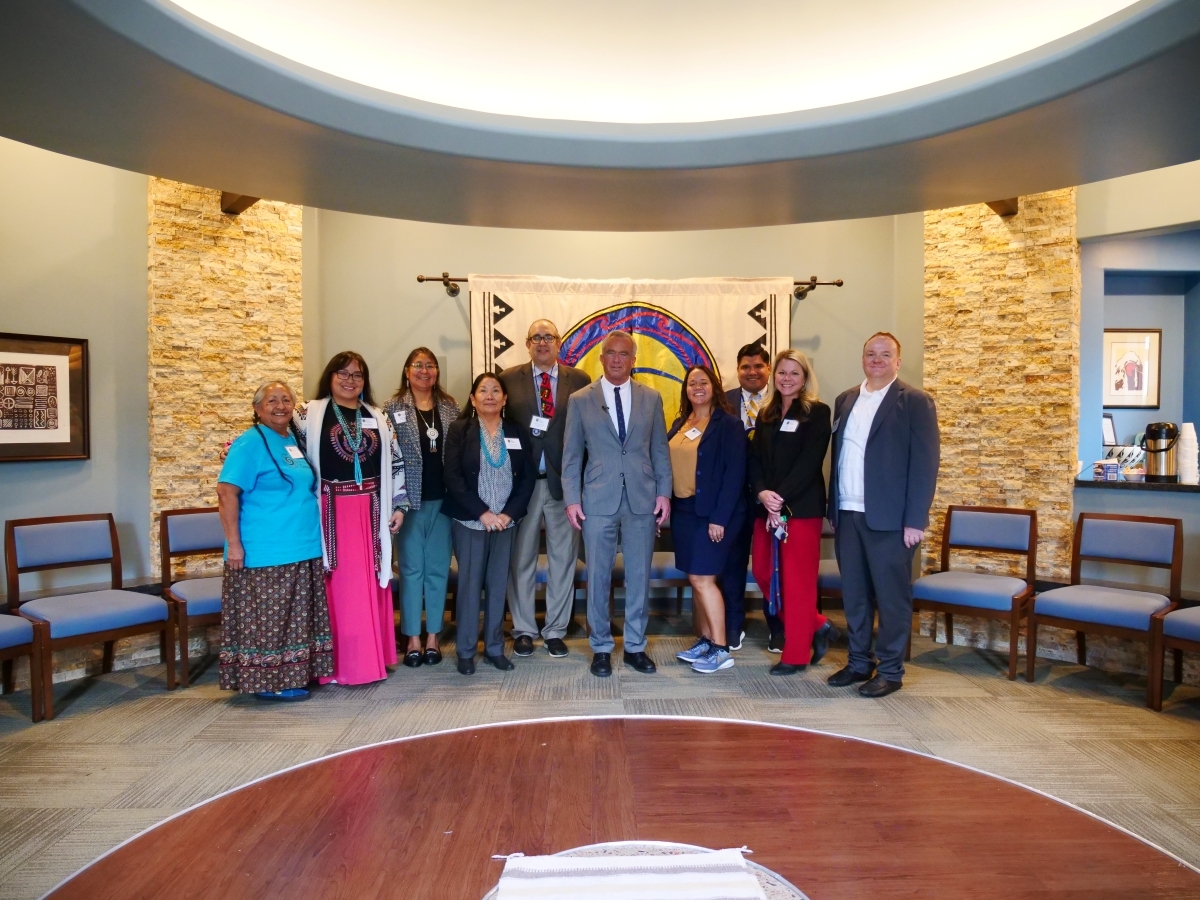
The Secretary explored NAC's family-centered treatment program and traditional healing practices employed at PWC. See photos from the day.
Native American Connections was honored to welcome Secretary of Health and Human Services Robert F. Kennedy Jr. to Patina Wellness Center last week.
During his visit, Secretary Kennedy toured the facility and spoke with a mother in treatment, who expressed deep gratitude for being able to keep her newborn son with her throughout her recovery. Her story is a powerful reminder of the impact our programs have on families.

In recognition of the Secretary’s visit, Native American Cultural Specialist Supervisor Manny Castro presented him with a traditional drum, symbolizing connection, healing, and community wellness.

Our traditions are the foundation of our organization - explore, learn, and utilize resources available for all.

Get the support you need with health, housing, and community services available at Native American Connections.

Your support changes lives and builds healthy communities. Find ways to get involved.

A "chronically homeless" individual is defined to mean a homeless individual with a disability who lives either in a place not meant for human habitation, a safe haven, or in an emergency shelter or in an institutional care facility if the individual has been living in the facility for fewer than ninety (90) days and had been living in a place not meant for human habitation, a safe haven or in an emergency shelter immediately before entering the institutional care facility. In order to meet the ‘‘chronically homeless’’ definition, the individual also must have been living as described above continuously for at least twelve (12) months or on at least four (4) separate occasions in the last three (3) years, where the combined occasions total a length of time of at least twelve (12) months. Each period separating the occasions must include at least seven (7) nights of living in a situation other than a place not meant for human habitation, in an emergency shelter or in a safe haven.
Federal nondiscrimination laws define a person with a disability to include any (1) individual with a physical or mental impairment that substantially limits one or more major life activities; (2) individual with a record of such impairment; or (3) individual who is regarded as having such an impairment. In general, a physical or mental impairment includes, but is not limited to, examples of conditions such as orthopedic, visual, speech and hearing impairments, cerebral palsy, autism, epilepsy, muscular dystrophy, multiple sclerosis, cancer, heart disease, diabetes, Human Immunodeficiency Virus (HIV), developmental disabilities, mental illness, drug addiction, and alcoholism.